Scapegoats
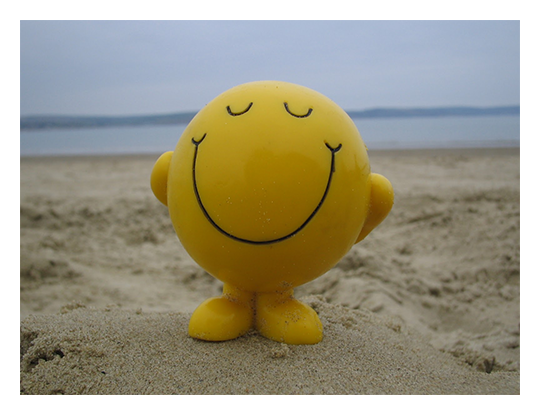
Blog No. 32 – Your happiness

You learn very young what makes you happy, and what does not. That distinction lays the groundwork for the kind of human being each child is going to turn out to be. It is important that children learn to assert themselves whenever they find themselves in a situation that makes them uncomfortable. That discomfort could be the pain visited upon those who are close to them, it could be an older person trying to teach them something other than the truth. Children are intuitive. All of them. They understand the truth.
Your happiness should be a thing that you nurture. It is precious. It is also important – once you have discovered what makes you feel happy – that you understand whether your kind of happy is a healthy happy or not. There are many unhealthy happies out there and they can be destructive, but they each have their reason for being. When we can see their cause(s) then we can decide whether or not we wish to keep them, whether or not they are necessary to carry as baggage. Sometimes the unhealthy happies are simply happy happies trying to explain an inexplicable pain. For some things there are no words.
When you love truly, unconditionally, the happiness of the other is as important as your own. When you understand that happiness feeds off itself, then you will understand that putting the other’s happiness ahead of your own is not only the supreme act of self-sacrifice, it is the natural thing to do when you find yourself at cross-purposes. It’s like finally getting for yourself something you have dreamed of your entire life and then giving it away for no good reason. Who on this planet would do that?
Filed under blogs
Love Letters
10.
MIND OVER MATTER
Stone for the Mind, Blood Stone (uncommon), Blood Ore.
…
When it is said that finding the truth can be like trying to get blood from a stone, it is true.
The truth does not come easy. Ever.
When it comes, you know it is a sign of respect. Deep respect, aeons old.
It means you are ready to hear it.
The truth does not turn up for a dress-rehearsal.
…
The wonder of Love and truth and Trust and Hope is no miracle.
It is a constant. It cannot, therefore, get lost.
Like it cannot be delusional. Wonder is independent of illusion.
And of Love.
That is by far its greatest strength.
( … and as for weaknesses, don’t underestimate them. They point out your strengths.)
…
Filed under blogs
Love Letters
9.
THE NOTION OF OUT-LOVING ONE ANOTHER
Once upon a very long time ago, there popped up a beautiful concept.
How – on this earth – to out-love one another?
It was an inspired idea. It was worth pursuing.
So I chased it up awhile.
Out-loving anything begins at home. Like charity.
And accountability.
…
When I count to 9 I see 3. Of 3. I’m pleased. I should.
it’s like 20/20 vision but better. Or, a thrice of triangles.
I would in that context say it was 49/51, to me.
That translates, now, into 102%.
How?
The 2% that makes a difference, is invisible.
…
I do believe that I know I could sustain myself in this way until ever. And a day.
I am good to myself like that.
Yes. Love is Epic. Operatic. A little bit spastic.
And call Love a retard. On a level, it is.
In fact, call it whatever the fuck you like.
Love – IS Love – is love.
…
Filed under blogs
Love Letters
8.
A LOVE OF AGES
There are a few points of reference in every life.
Each one is vital.
Points segue, or they should. Smoothly.
Like a slipstream follows the path of least resistance.
Step only into the slipstream with which you are familiar.
Stay behind the guide that you trust.
…
Romeo and Juliet fired the family Ides ago.
They left them with the gladiators and took a sabbatical.
It was called individuation, in parts.
In others, it was called Love.
Luckily the gladiators were into training.
They taught the family some values.
…
Frankenstein’s monster killed Frankenstein’s bride. Why?
Because he begged the question.
I believe he got the right answer.
Ultimately, his bride did too.
Frankenstein met his death with a gasp of surprise.
I am not quite sure why.
Filed under blogs
Realisations – Blog No. 31
Some realisations hit hard, like being knifed in the heart. Others flood your being with relief. It is the latter in which we – as a sentient people – find refuge. That refuge for a time provides respite, it strengthens us against the next onslaught of negativity. Negativity is bound to come and go, it is persistent in its attempts to contaminate the everyday. Let it come. Watch it go. That is how to build up your resistance. Practice does not necessarily guarantee perfection, but it gets you a lot closer to it than sitting wishing for expertise to strike you like lightning.
You will have realisations that cause you pain in this life. I suppose that is the sad reality. The happy reality is that one day you will come to realise that the pain was not a waste of time. Nothing ever is, if you do it properly. Your happy realisations will depend on who it is that you are. What makes us wholly happy as individuals is quite specific. What makes us sad is usually group therapy. As it happens.
Realisations, both good and bad, are vital for the growth of our understanding – they are never to be used for overstanding. When you learn something new, or you are shown a different way to do or improve something, you share that knowledge with those you know who will benefit from it. You do not waste time sharing it with those who do not need to know because for them there is no benefit in repetition. In fact, there is no point telling those people anything even once, but do it anyway. Their deafness is not your problem, but it will save you sleepless nights in your future past.
Filed under blogs
Insults – Blog No. 30
It is not difficult to become offended by what we hear – or imagine – are insults directed at our person, particularly because as humans our diversity means that different things piss off different people. Words and gestures in one culture may mean something positive, encouraging. In other customs the same words could be curses. It pays in delicate situations to know which words not to use – to hold your tongue when you are unsure of how your words will be interpreted – as much as it is helpful to speak openly when you know that certain words must be heard.
There are those who find swearing insulting to their ears. There are those that find piety to be a violation. Others cannot abide defiant women, advocating a woman’s submission because it demonstrates ‘respect’. It is interesting that some people find insulting the idea of outspoken women, as if a woman’s word cannot be taken as seriously as a man’s in a man’s world. Rudeness, on the other hand, is insulting to everyone, on every level. Usually, rudeness is not necessary – it is a choice, a kind of thoughtlessness. Like it is a choice not to respond to it.
The way it usually goes is that this one insults that one, and that one retaliates. Anger is generated. Then this one spits more insults and that one impacts them. Anger intensifies. That one then vents again with a poisonous diatribe in an attempt to annihilate this one. Tempers flare, faces rage. And then with a concerted effort one side – either this one or that one – decides not to respond to the provocation. In a moment, the conflict is over. No matter your own anger, your fury, your hatred – you cannot force a disciplined mind to fight.
Filed under blogs
Cultivating contentment – Blog No. 29
Contentment comes from deep within. That fact cannot be disputed. It comes, too, from how well you handle the projections you send into your future for yourself. When you are contented, the frequency at which you resonate becomes consistent with the rhythm of the greater universe. In that instance – in those cases – you need do nothing but experience the bliss that comes with understanding that we really are in charge – in control – of our own happiness. Trusting is a vital component of happiness and happiness is a vital component of contentment.
Contentment does not arrive on your doorstep unannounced. It has quite rigorous conditions for its existence and is not one of those things that happens without warning. The warnings are the hardships faced along the way to contentment. When you look at your difficulties in that light, you can feel relieved because the challenges you face daily become affirmations of better times to come. They assert that the future we require, the one in which we all have a say, is on its way. There is no happier thought than that, no better outcome. That is why we work towards contentment.
Contentment has quite a few components that contribute to its achievement. Peace, naturally, is one such aspect. Happiness, is another. There are methods for getting contented. You cannot simply step into its space, it is not a one-size-fits-all feature readily available. It requires the near-perfect balance of your person, and that level of accuracy requires a plan. You cannot reach near-balance without one. And you cannot reach contentment without a plan-ful of balanced aspects.
Filed under blogs
Timbuktu – Blog No. 28
As a child, when I discovered that Timbuktu was a real place – that it actually existed – I was delighted. For me, that put paid to the fallacy of urban myths and legends. I grew inclined to listen to them all because in part each one tells a truth. There is always comfort in the truth, no matter what the cost. The truth IS what brings inner peace – eventually. Before peace comes the inevitable facing of facts and figures, the empirical equation-solving. If you are an empiricist, yippee for you. I, fortunately, am not one of those. My truths come hard, and fast, and I assimilate them quickly. You can do that when you trust yourself implicitly.
If you should find yourself in a predicament, not knowing which way to head except Timbuktu, it is helpful to remember that Timbuktu is absolutely the arse end of nowhere. It may take the longest time to get there but when you do, you will understand why it takes such a long time to arrive. Timbuktu is home to a great many wayward pilgrims. It is the resting place of the brave. And ‘resting’ in my world is not synonymous with ‘dead’. It means repose. Reflection. Ultimately, contentment.
I think the houses in Timbuktu are probably invisible. Like its people. That is why Timbuktu became an urban legend – because no one ever got there before, or saw it. It decided it would one day become real, like a town on a map.
And that – is actualisation.
Filed under blogs